- 글번호
- 963586
[학술저서] Law and the Management of Disasters: The Challenge of Resilience
- 작성일
- 2026.01.08
- 수정일
- 2026.02.23
- 작성자
- 총관리자
- 조회수
- 23
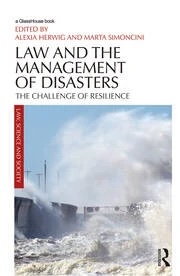
Disasters raise serious challenges for contemporary legal orders: they demand significant management, but usually amidst massive disruption to the normal functioning of state authority and society. When dealing with disasters, law has traditionally focused on contingency planning and recovery. More recently, however, ‘resilience’ has emerged as a key concept in effective disaster management policies and strategies, aiming at minimising the impact of events, so that the normal functioning of society and the state can be preserved. This book analyses the contribution of law to resilience building by looking at law’s role in the different phases of the disaster regulatory process: risk assessment, risk management, emergency intervention, and recovery. More specifically, it addresses how law can effectively contribute to resilience-oriented distaster management policies, and what legalinstruments can support effective resilience-building.
재난은 현대의 법질서에 심각한 도전을 제기합니다. 재난은 상당한 관리를 요구하지만 일반적으로 국가 당국과 사회의 정상적인 기능에 막대한 혼란을 초래합니다. 재해를 다룰 때 법은 전통적으로 비상 계획 및 복구에 중점을 두었습니다. 그러나 최근에는 사회와 국가의 정상적인 기능을 보존할 수 있도록 사건의 영향을 최소화하는 것을 목표로 하는 '복원력'이 효과적인 재난 관리 정책 및 전략의 핵심 개념으로 등장했습니다. 이 책은 재난 규제 과정의 여러 단계(위험 평가, 위험 관리, 긴급 개입, 복구)에서 법의 역할을 살펴봄으로써 회복력 구축에 대한 법의 기여를 분석합니다. 보다 구체적으로 법이 회복력 중심의 재난 관리 정책에 어떻게 효과적으로 기여할 수 있는지, 그리고 어떤 법적 도구가 효과적인 회복력 구축을 지원할 수 있는지를 다루고 있습니다.
- 저자
- Alexia Herwig, Marta Simoncini
- 서지
- Routledge
- 발간일
- 2016
- 첨부파일
- 첨부파일이(가) 없습니다.